
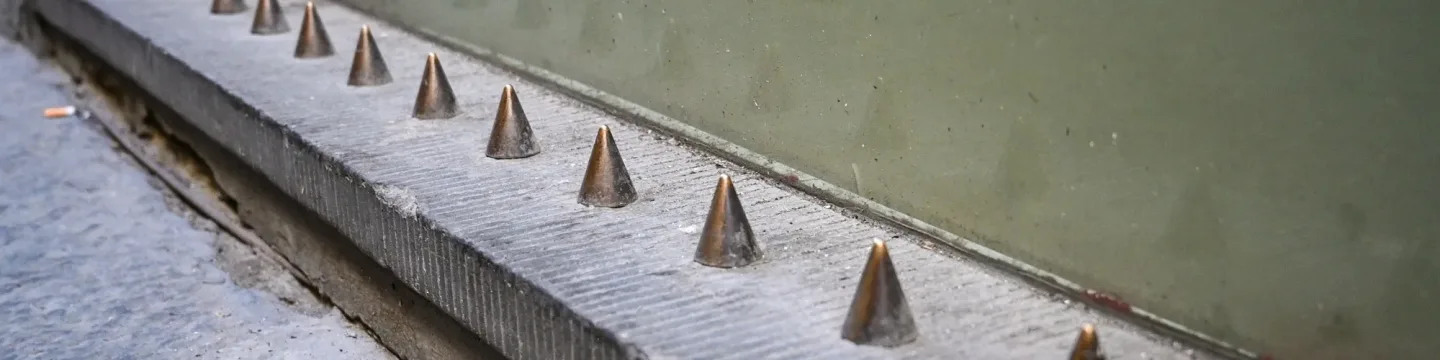
Hostile architecture – sometimes called anti-homeless design – is the deliberate shaping of public spaces to stop people from resting, sleeping, or simply existing in them. It’s targeted. It’s cruel. And it sends a clear message to people sleeping rough: you’re not welcome here.
Spikes on the floor. Bars on benches. Railings under stairwells. Sloped seats that stop you from lying down. CCTV watching your every move.
For people forced to sleep on the streets, these design choices mean fewer places to rest. It pushes them further out of sight – and further away from support. But it doesn’t just harm people who are sleeping rough. It makes public spaces harsher, less caring, and less human for everyone.
What is hostile architecture?
Hostile architecture is easy to miss – until you know what to look for.
Once you understand its purpose, you start seeing it everywhere. Across cities, subtle design choices are shaping our streets to keep certain people out. People who are most likely to rely on public space: rough sleepers, young people, and anyone pushed to the margins of society.
Some examples are blatant. Others are disguised as aesthetic design features. But they all serve the same purpose: to move people on, shut them out, and keep public spaces looking ‘tidy’ – no matter the human cost.
- Benches are curved, sloped, or split with armrests – making it impossible to lie down.
- Spikes are the most aggressive form of hostile architecture. Fixed to pavements, underpasses, or building ledges, they’re made of concrete or metal.
- Pavements are deliberately uneven or studded to make sitting uncomfortable.
- Planters, boulders, and street dividers often aren’t decorative – they’re placed to block doorways, ledges, or sheltered spots where people might sleep.
- CCTV, fences, anti-climb paint, and barriers are used to keep rough sleepers away from the few places they feel safe – places where they can get some much-needed rest.
Why does hostile architecture exist?
Hostile architecture isn’t new. Its earliest forms can be traced back to 19th-century Europe, with “urine deflectors” built into corners and doorways. But it was in the United States that hostile architecture began to take shape as a tool for segregation – designed not just to manage space, but also to control who could access it.
One of the clearest examples is the work of architect and city planner Robert Moses. In the mid-20th century, Moses designed a section of the Southern State Parkway in Long Island with low-hanging bridges – deliberately too low for buses to pass under. The goal? To prevent poorer, mostly Black New Yorkers – who relied on public transport – from reaching the beaches of Long Island. Wealthier, white residents travelling by car had no such issue.
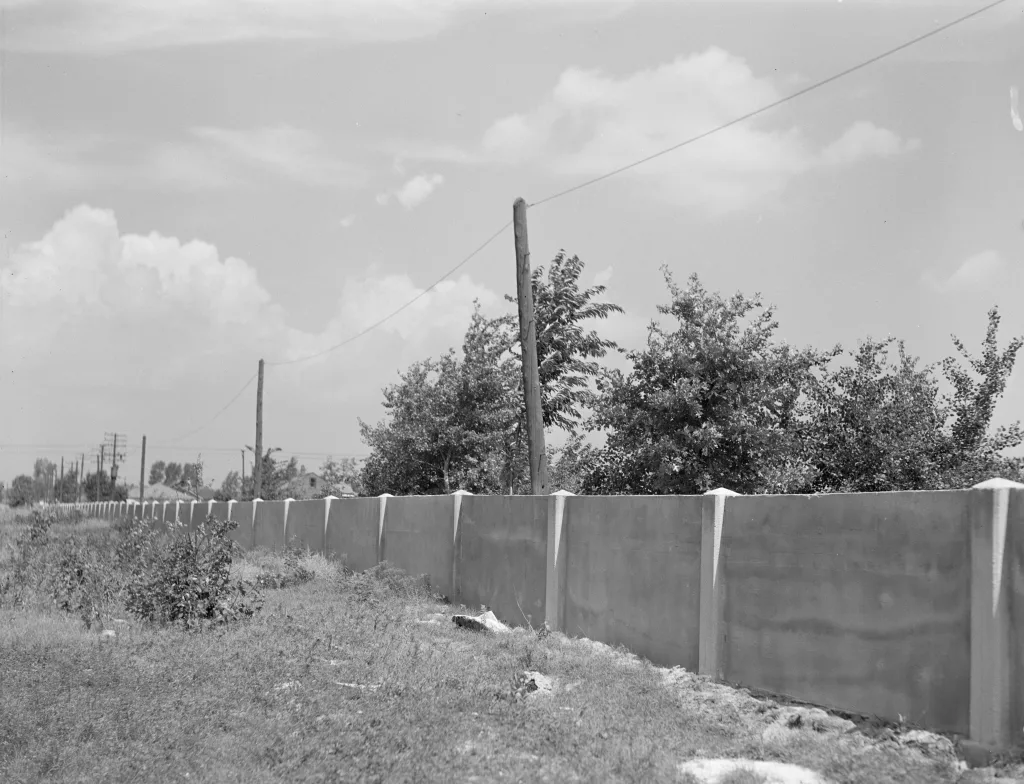
Another striking example is Detroit’s Eight Mile Wall – a 6-foot concrete barrier built in 1941 to physically divide Black and white neighbourhoods. It still stands today and is a symbol of urban planning used to segregate, rather than serve.
By the 1980s, hostile architecture was repurposed again – this time to target people sleeping rough. As homelessness became more visible in cities, governments and local councils began redesigning public spaces to push rough sleepers out of certain areas. They feared that visible homelessness would discourage visitors and investors. These hostile public design changes were justified as crime prevention – said to reduce street drinking, begging, and ‘anti-social behaviour’. But the intent was clear: keep homelessness out of sight. And out of mind.
Hostile by design. Backed by law.
Hostile architecture often goes hand-in-hand with laws that criminalise rough sleeping, like the UK’s Vagrancy Act. Instead of offering help, many towns and cities have chosen to “move people along” – rather than provide the support needed to get them off the streets and into a place to call home.
We’ve seen this approach on a global scale. A recent example was in the run-up to the Paris Olympics, when the French government forcibly relocated thousands of homeless people. Some were moved nearly 400 miles away, far from services, support, and any place that felt familiar. Displaced not because it helped them – but because they didn’t fit the image the city wanted to project.
Empathy over exclusion
Rough sleeping is life-threatening and isolating. Imagine lying there at night: exhausted, freezing, and terrified. Afraid of being beaten up, spat on, or raped. That’s the reality for many of the people we support. Hostile architecture only makes that reality worse, stripping away what few places of shelter remain. Denying people not just dignity, but the basic human need for rest. It’s inhuman.
Hostile architecture treats people on the streets like pests, not people. It doesn’t tackle the causes of homelessness – it just pushes people further away from support, making things harder, more dangerous, and pushing them deeper into crisis.
Public spaces should work for everyone, not just the few who ‘fit in’. They should bring people together, not shut them out. They should be built on compassion, not control. We need to build cities with empathy, not exclusion. That means ditching the spikes and barriers – and designing spaces that lift people, not push them down. It’s time to choose people over polished pavements.
What should our Government do?
The new Labour Government must make ending rough sleeping a priority. But we know that won’t happen overnight.
In the meantime, there are steps the Government and councils can take right now.
We need real policies, not just promises. That means:
- Clear design guidelines
- Stronger accessibility standards
- Community voices at the table
- Incentives for inclusive, people-first design
Be aware of hostile architecture and speak out against it
Homelessness hurts us all. It’s on all of us to help end it by challenging the systems and choices that keep people locked out. So, what can you do?
- Be aware of hostile architecture. Speak out against it on social media (@hostiledesign) or community forums. We want our public spaces to be inclusive and inviting for all.
- Look out for hostile architecture and call out those who installed it.
- Pressure councils and city planners to remove hostile architecture that divides people and ask them to focus on creating public spaces that unite us.
Everyone deserves to be treated with dignity and respect. That means tackling the root causes of homelessness, not hiding the symptoms. We need real change, not quick fixes. It’s time to stop sweeping homelessness under the rug and start building a system that truly ends it.
Our society is stronger when everyone has a place in it. Together, we can end homelessness.

Follow us on social media