
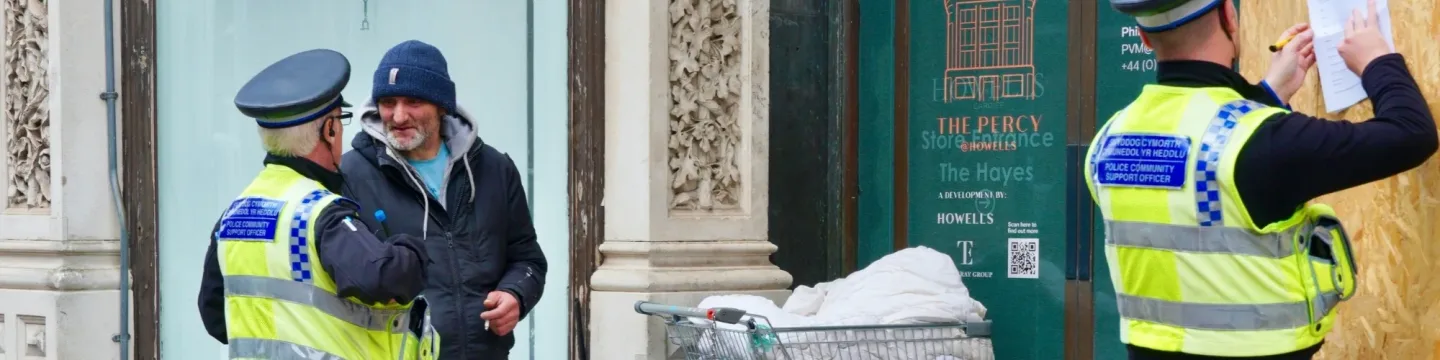
The Vagrancy Act was written over 200 years ago, but its impact is painfully current. It makes it a crime to sleep rough or beg in England and Wales. If someone is charged, they can be hit with a £1,000 fine. Punishing people for surviving isn’t a solution – it’s a barrier to getting back on their feet.
This outdated, atrocious law has no place in today’s society. It moves people on from city centres and away from the support that could help them rebuild their lives.
Why does the Vagrancy Act exist?
Passed more than 200 years ago in Georgian England, the Vagrancy Act belongs to a different world. Since then, the UK has been led by 78 governments and seven monarchs.
The Act was introduced after homelessness rose in the aftermath of the Napoleonic Wars and the social effects of the Industrial Revolution.
- After the war, many men returned home with nowhere to live. They slept rough and begged to survive. Instead of support, the Government criminalised them – even making it illegal to beg by showing the injuries they’d suffered serving their country.
- During the Industrial Revolution, people moved in huge numbers from rural areas to towns and cities in search of work, as Britain shifted from handmade to machine-made goods. Housing couldn’t keep up. Many people couldn’t find a place to live and ended up on the streets.
The repeal of the Vagrancy Act that never happened
Charities have been calling for the Vagrancy Act to be scrapped for decades. But for too long, the Government has failed to give it the attention it demands.
In 2022, Parliament repealed the Vagrancy Act – but it remains in force until replacement legislation is in place. So today, right now, people can still be stopped and arrested, not for what they’ve done, but because they have nowhere to call home.
*Repeal means removing a law, in part or in full.
Almost 2,500 people on the street were arrested under the Vagrancy Act in England and Wales between 2019 and 2024. And despite the promise to repeal it in 2022, over 500 more people have been arrested since.
And until the law’s repeal is fully enacted, people will continue to be criminalised for not having a home – a failure of society, not the individual.
Where does this leave us?
The Government has committed to ending the archaic law by Spring 2026. If it follows through, it will mark a real turning point – leaving behind a law that’s unjust and unfit for purpose, and choosing a response to rough sleeping rooted in support, not punishment.
Everyone deserves a safe place to call home. Criminalising people for not having one won’t bring that future any closer.

Follow us on social media