
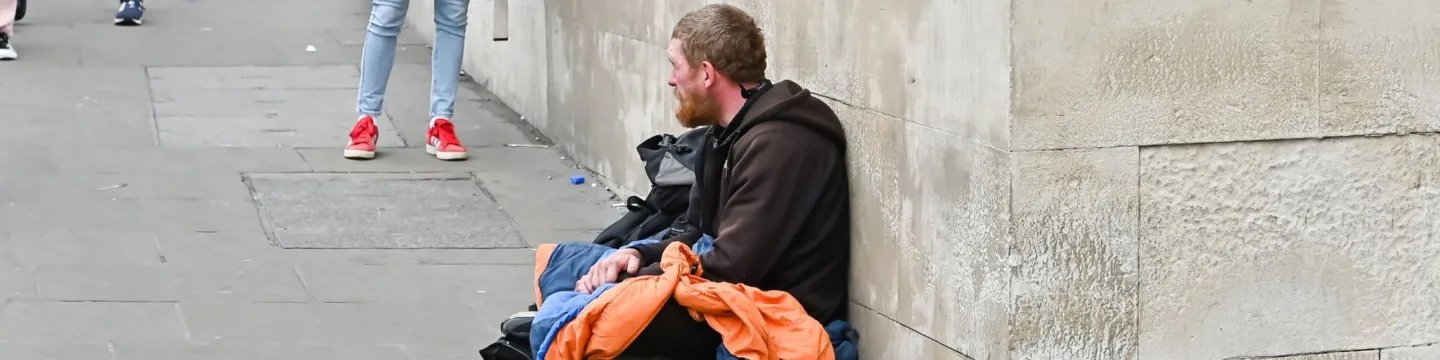
There is no single, right answer.
Giving money can help someone meet an immediate need. It will not fix homelessness. Both of those things can be true at the same time.
If you live in London, this is a situation you are likely to recognise.
You’re sitting on the Tube or walking down the street when someone asks you for help. Maybe they ask quietly, maybe loudly. Maybe they hold a sign. Maybe they make eye contact, or maybe they do not.
You want to help. Or maybe you can’t, but don’t want to be rude. You don’t know what the right thing to do is.
Here’s what’s worth understanding…
Why do people ask for money?
If someone is asking strangers for money on the street or on public transport, you can be almost certain they are going through a difficult time.
People don’t usually choose to ask for help in such a public, exposed way unless they feel they have few other options. It can be uncomfortable, vulnerable, and risky. It often comes after other forms of support have fallen away or were never there to begin with.
Not everyone asking for money is sleeping rough. Some people are sofa surfing, staying in unsafe accommodation, fleeing abuse, struggling with mental illness or going through a sudden financial crisis. Some may have lost work. Some may be waiting for benefits or immigration decisions. Many are navigating more than one of these at the same time.
What they all tend to share is this: life has become unstable, frightening, or overwhelming.
This context matters when we think about how we respond.
Does giving money to a homeless person help?
Giving money can help someone meet an immediate need. It might pay for food, a hot drink, a phone top-up, or transport. In that moment, it can make a real difference.
But giving money doesn’t fix the reasons someone is homeless or at risk of homelessness. It does not provide safe housing. It does not offer healthcare, mental health support, or addiction services. It does not address the systems that have failed someone in the first place.
That doesn’t mean you shouldn’t give. A hot drink can really make someone’s day. It just means it is short-term help in a much bigger picture.
What helps most in the long term?
Homelessness ends when people have access to safe housing, the right support, and the opportunities to rebuild their lives.
In London, that usually means specialist homelessness services that can offer:
- Outreach and support for people sleeping rough
- Safe accommodation
- Mental and physical healthcare
- Support with benefits, immigration status, or employment
- Long-term help to stay housed
For many people who want to help, donating to or supporting homelessness charities working locally is one of the most effective ways to make a lasting difference.
If you’re worried about someone sleeping rough, you can also contact StreetLink, which alerts local outreach teams who can offer support.
If you choose not to give money, acknowledgement still matters
This is one of the most important things we want people to hear.
If you can’t give money or choose not to, you can still help by acknowledging someone.
Many people who sleep rough or ask for help talk about feeling invisible. Day after day, people walk past without looking at them. No eye contact. No response. No acknowledgement that they exist.
Over time, that can be deeply dehumanising. A brief moment of recognition can mean more than we realise. Making eye contact. Smiling or nodding in acknowledgement. Saying sorry, I cannot help today. These small acts remind someone that they are still seen as a person, not a problem to be avoided.
You don’t owe anyone money. But recognising someone’s humanity costs nothing, and it can matter a great deal.
If you do give, do it with respect
If you decide to give money, try to do it in a way that preserves dignity. Acknowledge the person. Avoid judgement or assumptions. Remember that homelessness is something people experience, not who they are. There’s no need to interrogate or advise. A simple, respectful interaction is enough.
The bigger picture: ending homelessness in London
It’s worth remembering that homelessness is not caused by individual choices on a Tube carriage, and it is not solved by individual commuters either.
Homelessness is shaped by housing shortages, rising rents, poverty, trauma, and gaps in health and social care. Ending it requires political will, investment, and long-term solutions.
What individuals can do is stay compassionate, stay informed, and support the organisations and systems working to make homelessness rare, brief, and non-recurring.
Is it better to give money or food to someone homeless?
Both can help in the short term.
You could try asking the person what they need. People experiencing homelessness have preferences like anyone else.
Here are some things that are often needed and appreciated:
- Food and drink – a sandwich, snacks, water, or a supermarket voucher
- Warm clothing – a woolly hat, gloves, or a coat
- Sun protection – suncream, a hat, or an umbrella for shade
- Period products – pads, wipes, and other women’s products
Remember that long-term change usually comes through housing and specialist support.
How can I help someone sleeping rough in London?
You can contact StreetLink, support local homelessness charities, and treat people with dignity and respect.
Does giving money encourage homelessness?
Homelessness is complex and driven by structural factors such as housing supply and poverty. Individual acts of giving do not cause homelessness.

Follow us on social media