
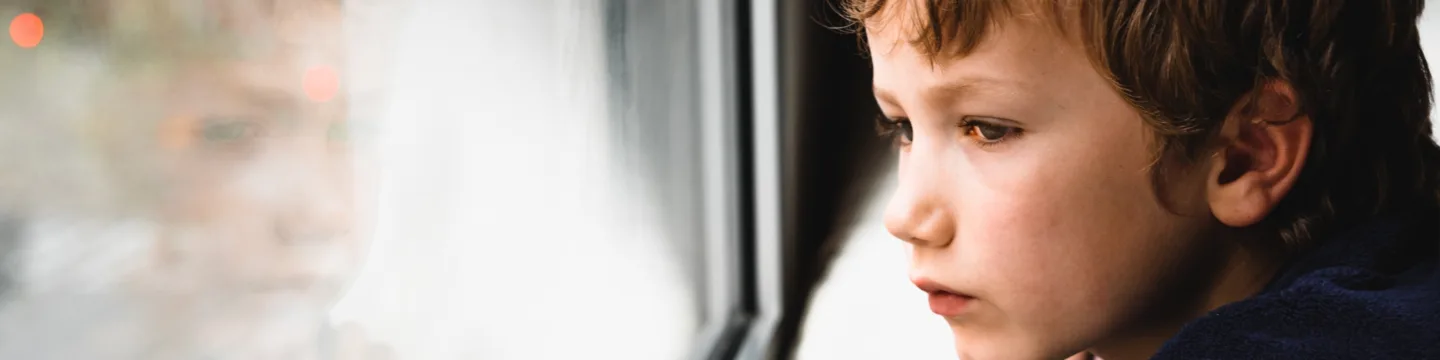
Childhood trauma lays the groundwork for future instability. It can leave lasting scars, increasing the risk of homelessness, often years later. Understanding this link helps trauma-informed services intervene earlier.
Homelessness rarely happens overnight. It may look sudden from the outside, but for many people, the journey starts long before lost income, eviction notices or broken relationships.
Those might be the final trigger points, but the real causes run much deeper – often rooted in trauma and in moments of fear, loss and instability in childhood that were never addressed and left lasting scars.
Children who grew up around abuse and didn’t feel safe. Children who felt fear when they needed love. Children who moved from place to place, with care that was inconsistent or missing altogether. Children who didn’t know who to trust – or how to ask for help.
These early experiences push young people into survival mode before they’ve even had a chance to grow. And the impact doesn’t end in childhood. It stays with them – leaving deep, lasting marks. Marks that shape a person’s mental health, their relationships, their ability to handle life’s pressures – and too often, the chance to keep a stable home. At Single Homeless Project, we hear these kinds of stories time and time again from the Londoners we support.
Nina was raised in a homophobic family and faced relentless bullying in school because of her gender identity. It left lasting marks that she lived with for years.
My father said things like, ‘There will be no homosexuals in this family – or they’ll be cast out.’ He was proud when a gay couple were fired from one of my uncle’s factories for being themselves. ‘Those people don’t deserve to live,’ he’d say.

Research by Evolve Housing found that 79% of people experiencing homelessness had experienced childhood trauma. But many are unaware of how their childhood trauma links to homelessness – with most pointing to more immediate causes like a relationship breakdown for their current situation.
What is childhood trauma?
Often called Adverse Childhood Experiences (ACEs), childhood trauma occurs when a child experiences deeply distressing or harmful events before age 18.
This doesn’t always come from a single, visible moment. Trauma can be ongoing, hidden, or dismissed as “just the way things are.” But the emotional toll is very real and lasting.
Common causes of childhood trauma include:
- Physical, emotional or sexual abuse
- Neglect – being denied care, food, clothing, or emotional connection
- Losing a parent or caregiver through death, imprisonment, or separation
- Placed in care or moved repeatedly
- Growing up in poverty or facing long-term housing insecurity
- Witnessing domestic abuse
- Living with substance misuse or untreated mental illness at home
- Bullying, racism or discrimination
- Seeing violence or crime in the community
- Living through conflict or in a war zone
While these traumas alone don’t directly cause homelessness, the connection is clear: people who’ve experienced four or more ACEs are 16 times more likely to face homelessness later in life.
How childhood trauma changes the brain. Here’s the science:
Childhood trauma can seriously disrupt brain development. When the stress response is triggered repeatedly over a prolonged time – like when a child experiences abuse or neglect – the brain rewires parts for survival.
The amygdala (aka ‘the fear centre’) of a child living with trauma is likely to be in overdrive, constantly signalling danger, releasing cortisol and priming them for fight, flight, or freeze responses. While these may help a child at the time, they can prevent healthy emotional regulation and learning necessary resilience for adulthood.
Brains adapted for danger may also function differently in the anterior cingulate cortex (aka ‘the emotional regulation centre’), making it challenging to manage strong emotions.
All of this can make it harder to stay steady in life, whether it’s staying in education, holding down a job, or keeping a home. Even minor setbacks can hit hard for people with childhood trauma. And these setbacks can spiral into something serious, hugely increasing the risk of someone being pushed into homelessness.
Without early intervention and trauma-informed care, the effects of trauma can deepen further – making it harder for people to access the stability they need to heal, rebuild, and thrive. And even when support is available, trauma doesn’t just disappear. It can show up as anxiety, depression, or a deep mistrust of the very services that are there to support. For many, this creates a cycle that’s incredibly hard to break – keeping people stuck in homelessness for far longer than they should be.
So, while losing a job, tenancy, or a relationship breakdown might be the moment things unravel, it’s rarely where the story begins. Homelessness often follows a long journey through trauma – trauma that no one saw, named, or supported.
Our trauma-informed approach at Single Homeless Project
At Single Homeless Project, we use trauma-informed care across all our services. That means looking beyond bricks and mortar and understanding the experiences that shape someone’s journey. We take the time to listen, build trust, and offer support that meets people where they are.
We recognise the signs of trauma and respond with empathy, not judgement. Our services are built to be safe, respectful, and rooted in dignity. It’s not just about providing support – it’s about walking alongside people as they rebuild their lives.
Whether someone is accessing housing, mental health support or recovery services, we see the whole person, not just their situation.
Want to hear more about trauma-informed care and examples of what this looks like in real life? Watch our colleague Rosie’s TED Talk.
Homelessness is an experience, not a forever. With the right support, it can be ended.

Follow us on social media