
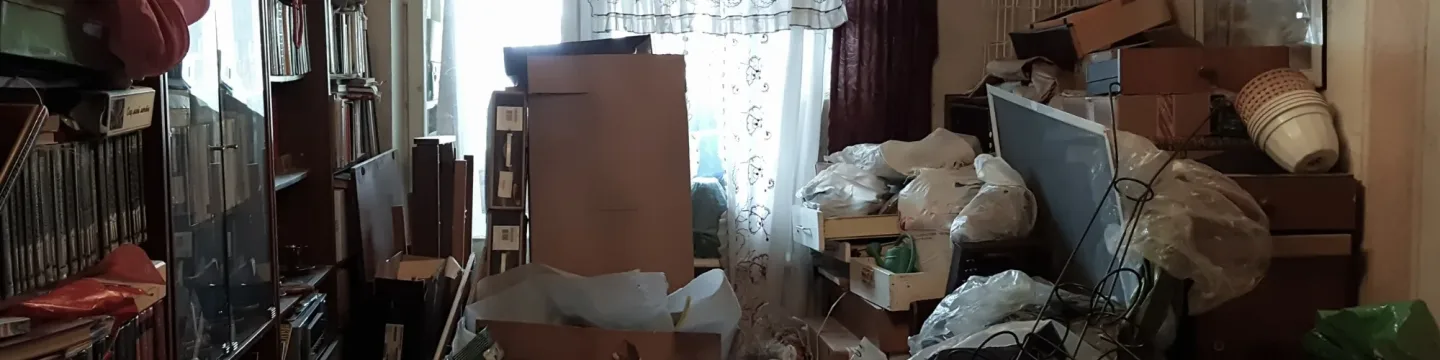
Hoarding is a serious mental health issue – and one we don’t talk about enough.
It affects around 2–5% of people, yet still doesn’t get the understanding or support it deserves. Behind every person who hoards is someone struggling – often in silence, too ashamed to ask for help. And without the right support, hoarding can spiral into something much worse: dangerous living conditions, eviction, or homelessness.
At Single Homeless Project, we support Londoners experiencing hoarding to help them regain control of their mental health, their homes, and their futures.
In this article, we explore why people hoard, how it connects to homelessness, and what compassionate, trauma-informed support really looks like.
What is hoarding?
Hoarding is when someone holds onto so many items that their home becomes difficult to live in – often to the point where it’s no longer safe, clean, or functional.
It becomes a serious problem when:
- It causes distress, anxiety, or conflict – especially when others try to help or tidy
- The clutter gets in the way of everyday life – like not being able to move around freely, cook, wash, or use essential rooms
Unlike everyday mess, hoarding is complex. Many people don’t see the impact it’s having on their health, home, or relationships. And even when they do, shame, guilt, or fear of judgment can stop them from asking for help.
Why do people hoard?
We all have things we like to hold onto – items that remind us of people, places, or moments. But hoarding is something different. People who hoard often feel a deep emotional attachment to their belongings. That connection can begin after trauma – like the loss of a loved one – and sometimes, even they can’t explain why letting go feels impossible.
Hoarding is a recognised mental health condition, and it can often occur alongside other physical or mental health challenges – adding another layer of difficulty. There’s no single cause, but there are common patterns.
People who hoard are more likely to:
- Have a family history of hoarding
- Live alone
- Be unmarried
- Have experienced a difficult or unstable childhood
To others, many of the items kept may seem worthless. But to the person hoarding, they can offer comfort, security, or control – filling emotional gaps or helping them feel less alone.
Letting go can cause intense anxiety. The decision to throw things away can feel so overwhelming that it’s easier – and emotionally safer – to hold onto everything.
What’s the difference between hoarding and collecting?
It usually comes down to two things: how items are organised, and how much they affect daily life.
Collectors tend to choose items carefully – like records or stamps – and display or store them in an organised way.
Hoarding is different. It’s less selective, and items are often kept in large amounts without structure – making it hard to use the space safely or find things when needed.
How hoarding is linked to homelessness
Many of the people we support have experienced hardship and instability from a young age. For some, hoarding becomes a way to cope – a way to feel safe, in control, and grounded when everything else feels uncertain.
It’s not about the stuff – it’s about what the stuff represents. And without the right support, that coping strategy can lead to unsafe conditions and eventually the loss of a home.
Research shows a clear link between hoarding and homelessness. In a study of 78 people living in Salvation Army homeless shelter:
 21% showed symptoms of hoarding
  8% said their hoarding directly led to their homelessness
 Another study found that 18.5% of people experiencing homelessness showed signs of hoarding disorder – making it three to four times more common than in the general population.
Hoarding may only become visible once someone moves into housing – when they finally have space to keep things. But that doesn’t mean the issue is new. Most hoarding symptoms begin around age 13 and are closely linked to Adverse Childhood Experiences (ACEs). Children who experience severe adversity are up to 16 times more likely to face homelessness later in life.
Hoarding and eviction risk
Hoarding can create serious health and safety risks, including:
- Dangerous or unliveable conditions
- Fire hazards
- Mould growth
- Infestations
If the property becomes damaged or breaches tenancy agreements, landlords can evict. Even for people who own their home, hoarding can cause issues with neighbours – and may lead to police involvement if it’s seen as anti-social behaviour.
Eviction can have lasting consequences. Without a good landlord reference, it becomes much harder to rent again – and that stigma can follow someone for life.
How we support people
We know how overwhelming and intrusive it can feel to get support for hoarding. That’s why we take time to build trust, working at each person’s pace and without judgment.
Our specialist teams work with people to understand what’s behind the behaviour – often with input from mental health professionals. Together, we create long-term, tailored support plans that centre the person, not just the clutter.
In more severe cases, people may be told to declutter or face eviction. When that happens, we don’t leave them to navigate it alone. We’re there to explain the process, advocate on their behalf, and help them create a safer, more comfortable space – one they feel proud to call home.
Learn more about how we support Londoners with their mental health.

Follow us on social media