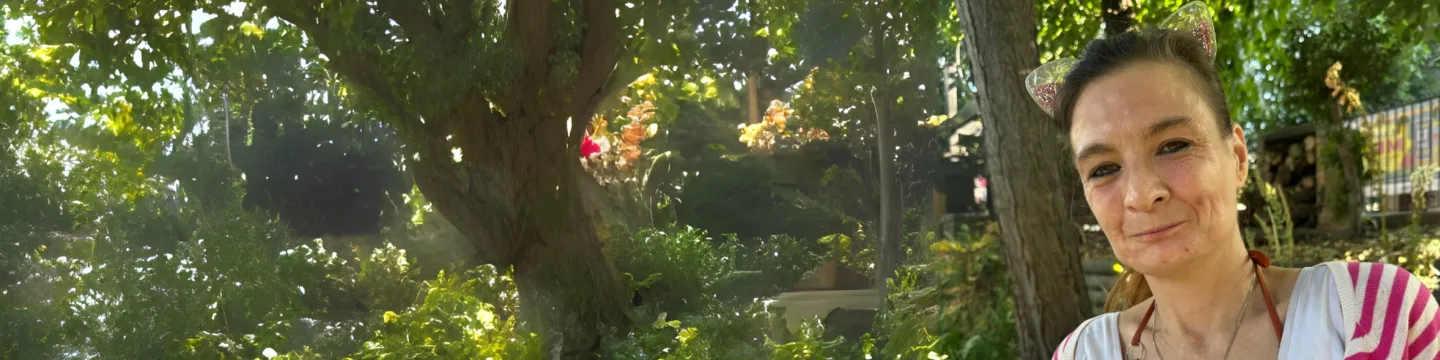
Nadia was working in a job she loved in a primary school in Barnet when a bad experience with her partner led to an arrest, a suicide attempt and a mental health breakdown. Following a three-month hospital stay, she went into a homeless accommodation. It didn’t offer the support she desperately needed and marked the start of ten years of sleeping rough and in and out of twenty different unsuitable homeless shelters. Three years ago, Nadia came to Single Homeless Project’s specialist women’s centre. Today, she’s doing well and looking forward to moving into a place of her own with her own front door.
“When I left the hospital, I felt totally let down and shoved from pillar to post. The homeless accommodation I went to was awful. That’s when I became addicted to opioids, and it led to ten years of living on the streets and in and out of twenty different homeless shelters that didn’t help me in the way I needed.
“Living on the street is like being in a dark hole”
Nadia’s time sleeping rough took a heavy toll – physically, mentally and emotionally. The trauma of street homelessness left her feeling exposed and dehumanised.
“Living on the street is like being in a dark hole. People look down on you, and it’s so hard to get back up. I slept in people’s sheds, abandoned cars and buildings. When I slept in car parks, I made sure I stayed near the gates so I could hear if someone tried to open them. I’d try to find someone to stay near me so I could feel safer whilst I slept.”
She also experienced shocking violence and hostility while simply trying to survive.
I had some horrible experiences. Caretakers have hit me with brooms and mops and even thrown water over me for sleeping in a bin shed. I was given an ASBO for sleeping on the top floor of an empty tower block. I wasn’t doing anything bad. How is that right? When someone has nowhere to go?
Flickers of humanity
Despite the hardship, Nadia remembers the acts of kindness that helped her keep going.
“I do remember some kindness from people. Once, a lady in Camden gave me £50 after I asked her for a cigarette and she realised I was homeless. I’ll never forget that. Another time, I was living in someone’s shed. Once they realised, they started leaving me a hot meal, hot water and baby wipes for when I came back every night.”
But after so many years without the right support, Nadia lost trust in the system.
“They saw me as a person”
Everything changed when Nadia came to our specialist women’s centre three years ago. At Single Homeless Project, she finally found the kind of support that met her where she was and walked alongside her.
“After so many years of bad experiences at homeless hostels, I just didn’t believe in the system anymore. When I came to Single Homeless Project, I felt like my support workers, Constance and Judit, really saw me as a person. They saw what was happening then and there, not just my history. When I lost my temper, they would talk to me and reassure me they were on my side. And I grew to trust them. Now the wheels are in motion for me to move into my own place, and I’m looking forward to having my own front door.”
Nadia’s story shows exactly what happens when homelessness services aren’t designed for women – and what’s possible when they are.
At our women’s centre, we provide specialist, trauma-informed support to help women move forward from homelessness, violence and deep-rooted trauma. But for women like Nadia, these services are the exception, not the rule.
That’s why we’re calling on the government to take urgent action. A gender-informed national strategy on women’s homelessness would give local areas the tools and funding they need to prevent women from being trapped in cycles of fear, violence, and rough sleeping.
Because having a home isn’t just about shelter. It’s about safety, self-worth, and a future you can believe in.

Follow us on social media