
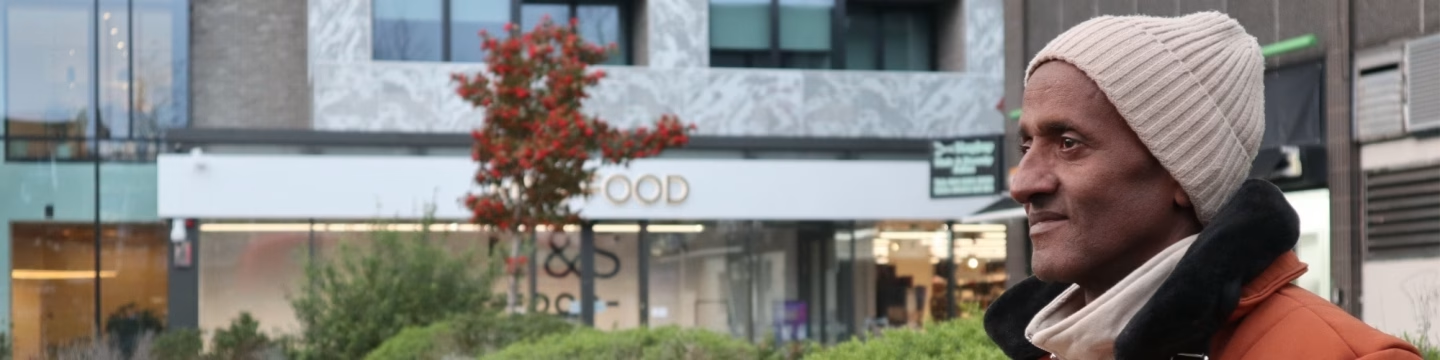
When Melake escaped Ethiopia, he dreamed of building a new life. But the reality was much different. Bureaucratic issues as an asylum seeker left him homeless for over twenty years, sleeping on our city’s streets. It wasn’t until he had severe problems with his health that he got the support he needed. Our Islington Hospital Discharge Service helped him get what he needed most: a home, the first in 30 years. Now, he’s on the up and looking forward to the life he had dreamt of.
“I came to the UK in 1993. I had escaped Ethiopia to claim asylum here, wanting to build a better future.
“Instead, my asylum application was rejected. I couldn’t do anything – claim benefits, go to college, or work, even though I wanted to. It was a desperate situation. I spent every night on the streets for the next four years.
“The streets are scary. I found places where I could get food and wash. But as soon as night came, everywhere shut its doors, and you’re left to fend for yourself.
“One night, I was robbed and beaten up by a group of men. I couldn’t believe that people could be so awful. How could someone do that to me when I had nothing?”
After four years, the Home Office reopened Melake’s case. He started receiving his benefits. But this was the beginning of the rollercoaster. A law change in 2004 took his benefits away, and, unable to legally work, he soon ended up back on the streets.
“Everything was taken away from me so quickly. I had to start all over again. I did what I could to get by, like earning money by cleaning shops. But I hated being on the streets. People would look at me like I’m a scary man.”
An uncertain future
After 20 years in the UK, it looked like there was no end in sight for Melake.
“The Home Office was no help. I heard nothing from them. I was told to wait, but I had been waiting for years.”
Jeremy Corbyn, MP in Islington, where Melake was rough sleeping, eventually stepped in. He looked at his case, sorted out his asylum status, and got him a UK passport. It was a step in the right direction. But as Melake tried to claim welfare support, he was pushed back again.
“I was rejected for welfare support as I had no registered address for the past nine years. It felt like the world was out to get me.”
Over the next five years, Melake pieced his life together. In 2017, he moved in with his cousin’s family near King’s Cross and found work in the construction industry.
“It was a roof, but it didn’t feel like home at my cousin’s. I felt like I was intruding every time I walked through the door.”
A turning point
One day, Melake was taken to the hospital after falling seriously ill. His time on the streets had taken a toll on his health, and he had severe liver damage. He stayed for months before being discharged. When the hospital learnt he had no registered address for 13 years, they contacted the Council. Melake was then connected with our Hospital Discharge Service, placed in emergency accommodation and given a Support Worker, Tafari.
Tafari has been amazing. He understands me, and he has helped me massively. I trust him with everything I share with him. He saved my life.
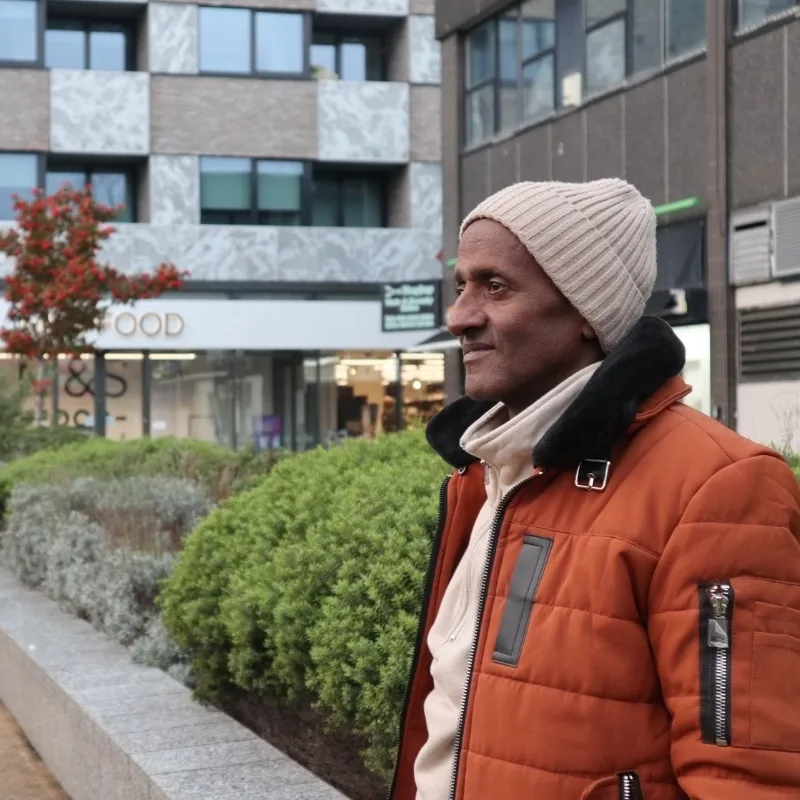
“He has supported me with forms, accompanied me to the hospital, and helped me find a home. I moved in last month!
“I’m so happy now. I tell myself every day about how lucky I am. I wake up, surprised to have a roof over me. I’ve got a home for the first time in 30 years. I can’t believe it. Just having a key means so much.”
Melake’s life was a living nightmare for 25 years. The trauma still haunts him to this day. But now, he is finally living the life he hoped for. His story shows how people can slip through the system and fail to get the support they need.
It shows the danger a non-UK national can face. With no recourse to public funds, they can quickly become homeless despite having built a life in the UK.
Homelessness is an experience, not a forever – and with the proper support, it can be ended.

Follow us on social media